
Roof Moss Removal and Treatment in Capitol Hill, Seattle
Moss brushed off by hand and a zinc-free treatment put down, on the Portage Bay slope and across the hill
Renova Exteriors removes roof moss in Capitol Hill by hand, brushing it out of the shingle seams and clearing the roof before a zinc-free moss-prevention treatment goes down to stop it coming back. The hill's north slope toward Portage Bay and its maple-shaded streets grow moss faster than almost anywhere in Seattle, and we have been treating roofs here since 2009.
Real Moss Work in Capitol Hill
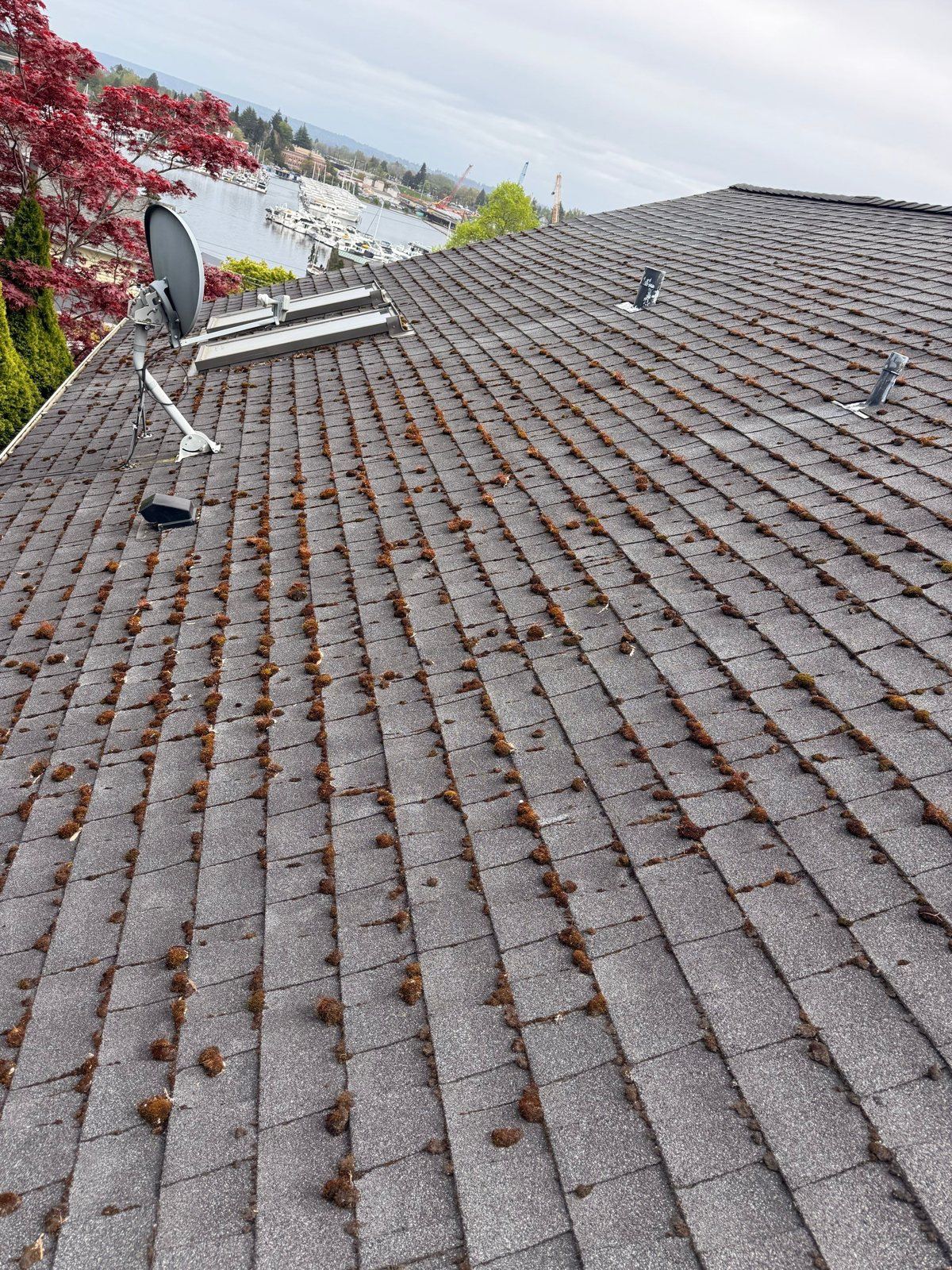
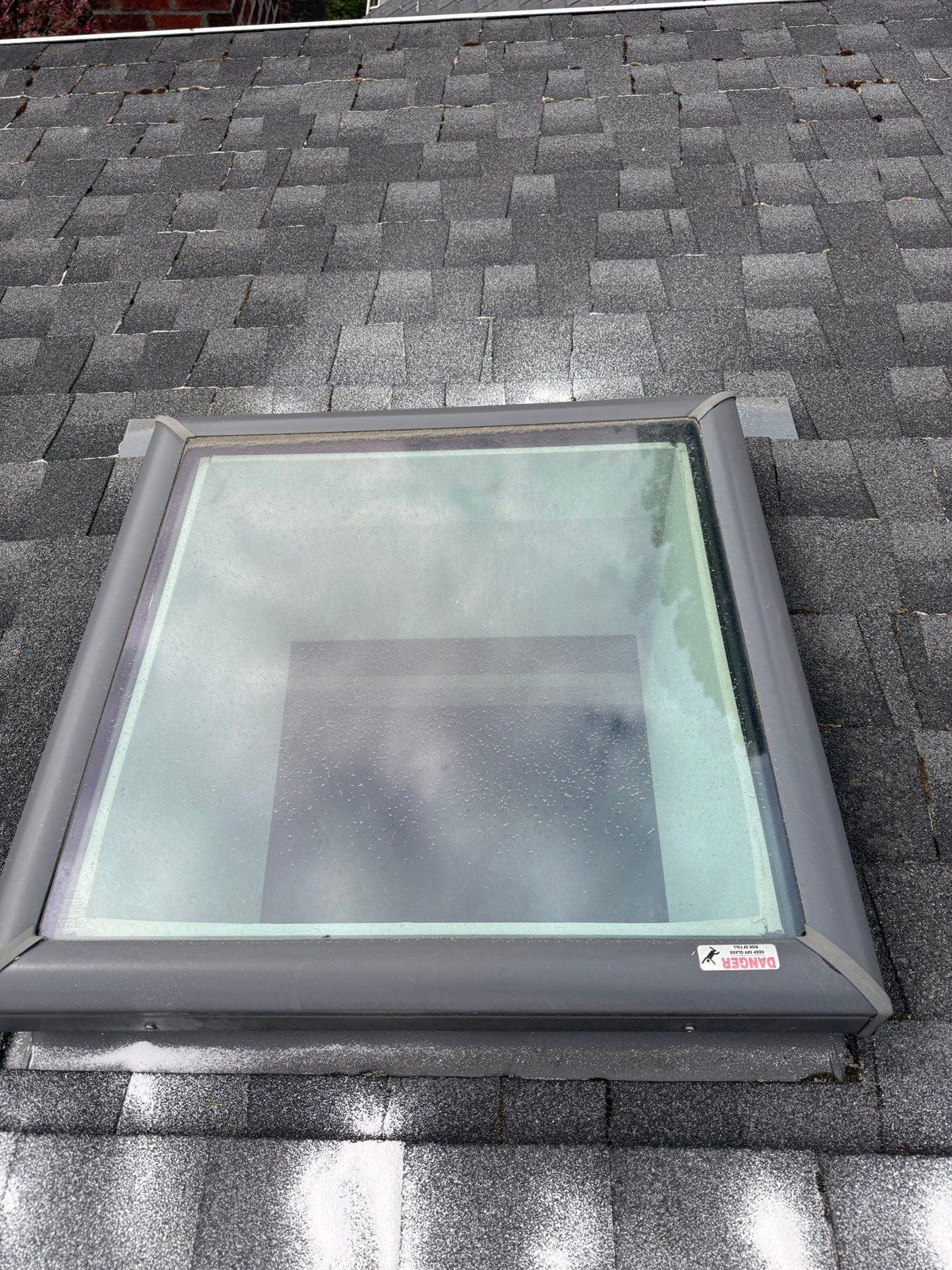
In late April Riley took on a roof on the Portage Bay slope, above the marinas on the north side of Capitol Hill, that had gone orange with moss in every course, with the gutters packed with blossom petals and dark debris. Riley brushed the moss out of the shingles by hand and cleared the roof, cleared the gutters, and then laid the white moss-prevention treatment across the field and in a band around both skylights, and cleaned the skylight glass last.
What Moss Removal Involves
We loosen moss from the edges of the shingles with brushes, course by course, and clear the loose material with a blower. Then the treatment goes on: a white granular powder that dissolves in rain, works down through the shingles, kills the spores and changes the surface chemistry so moss cannot re-establish. We never pressure wash a roof, because that strips granules and voids the shingle warranty, and the gutters are cleared on the same visit.
Capitol Hill-Specific Considerations
The North Slope Toward Portage Bay
From Roanoke Park down to the water, roofs face north and sit under the big-leaf maples of Interlaken Park. They get little direct sun from October to April, so moss shows here first and thickest, and the Portage Bay roof above is what two shaded winters look like.
Tall Houses on Steep Lots
The west slope above I-5 and the north slope both carry tall houses with steep pitches and long ladder runs. Three-storey homes and steep pitches each carry a complexity adjustment on our quotes, because staging a ladder safely on a sloped lot takes more time and care than a rambler does.
Period Roofs in the Harvard-Belmont Landmark District
The district on the west slope, designated in 1980, holds houses built mostly between 1905 and 1910, and exterior work visible from the street there goes through the Landmarks Preservation Board. Regular moss removal is the cheapest way to keep an original roof going.
Moss Questions From Capitol Hill
Why do roofs on the north slope of Capitol Hill grow moss faster than the rest of the hill?
Because they face away from the sun and sit under Interlaken Park's maples. A north-facing roof between Roanoke Park and Portage Bay stays damp for days after a rain, which is exactly what moss needs to establish. The same house on the 15th Avenue ridge, in full sun, would stay clean a season or two longer.
Is April too late in the year to treat moss on a Capitol Hill roof?
No. Spring is when moss is easiest to see and easiest to remove, because it is fully grown and lifts cleanly. The treatment is a powder that dissolves with rain, so the April showers carry it through the shingles right away. The Portage Bay roof above was cleared and treated on the same April day.
Can you treat the roof around skylights and a flat section?
Yes. Skylight curbs and low-slope sections are where moss collects most on a remodeled Capitol Hill house, and we work them by hand: moss brushed from the curb, the treatment laid in a band around it, and the glass cleaned last so you notice the light before you notice the roof.
What does moss removal cost on a Capitol Hill roof?
Our published ranges run $150 to $400 for treatment alone, $400 to $1,000 for light moss removal with treatment, and $600 to $2,500 for moderate to heavy moss. Three-storey houses and steep pitches, which are common on the slopes, add a complexity adjustment. The full ranges are on our pricing guide.
Serving Capitol Hill From South Seattle
Our shop is in South Seattle near Boeing Field, about twenty minutes up I-5 outside rush hour, and our crews are on the hill often enough that a roof visit here usually pairs with a job nearby. The roof, the treatment and the gutters are handled by one crew in one morning.
Licensed, Bonded and Insured
Renova Exteriors is a licensed, bonded and insured Seattle company, and our technicians arrive in marked vans. Ask and we will send our insurance certificate with the quote.
Capitol Hill Neighborhoods We Treat Roofs In
Portage Bay / Roanoke Park
98102
Broadway
98102
15th Avenue
98112
Volunteer Park area
98112
Cal Anderson Park vicinity
98122
Harvard-Belmont Landmark District
98102
Miller Park
98112
Stevens neighborhood
98112
Interlaken Park area
98112
Nearby: Madison Park and Madrona.
Get the Moss Off Your Capitol Hill Roof
Send us a photo of the roof from the street and we will come back with an itemized quote for removal, treatment and gutters.
To never think about it again, our Moss Protection Program adds two visits a year with a Moss-Free Guarantee: if visible moss comes back during your program year, we return and treat it at no charge.
Moss removal and treatment in Seattle | Exterior detailing in Capitol Hill | Roof cleaning | Gutter cleaning | A roof moss job in Rainier Valley, in the customer's words